The Arteries
of Trade.
Securing the physical and digital supply chain infrastructure that connects the UK to its 9 Sovereign Corridors.
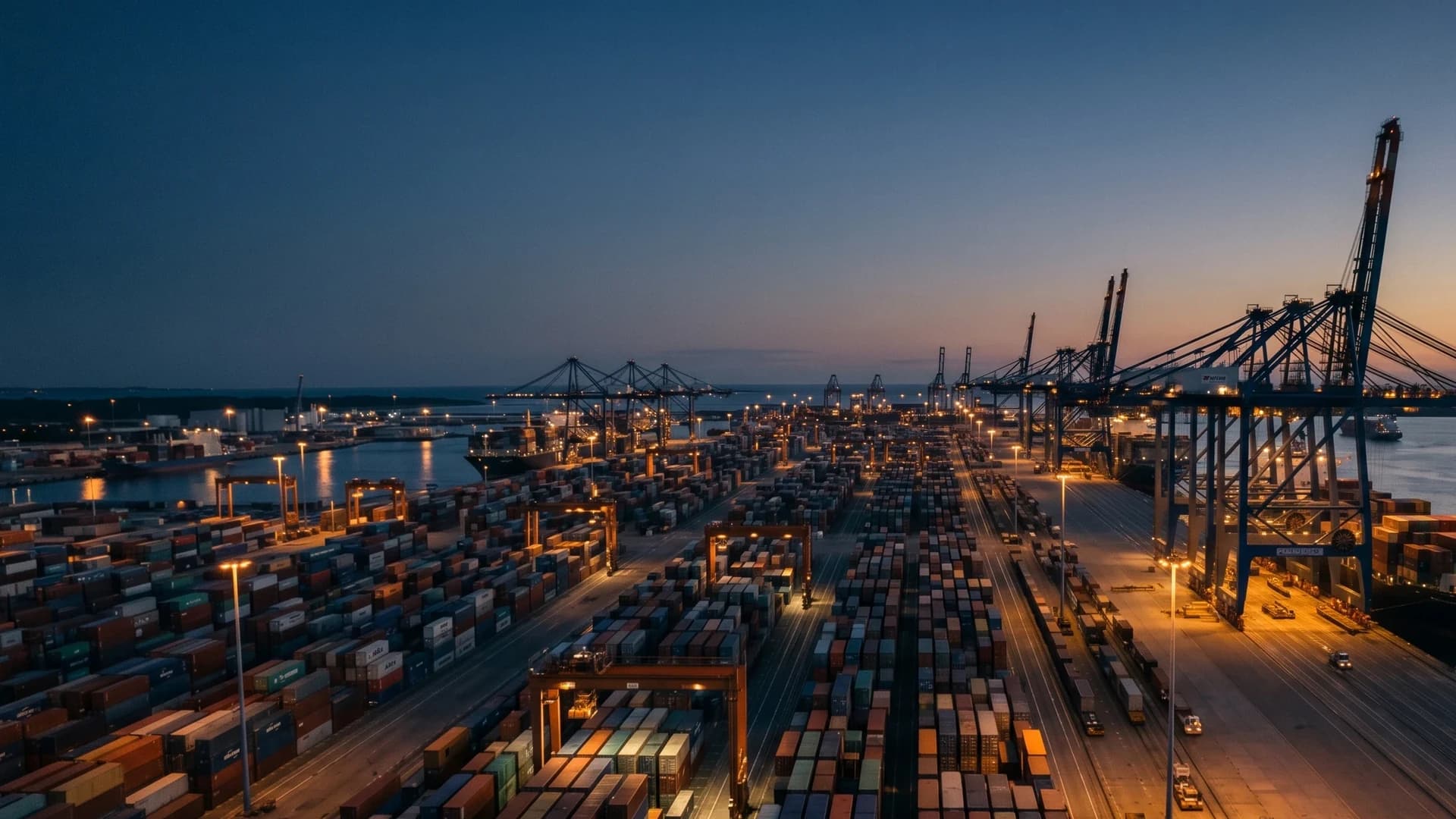
In March 2026, the UK's logistics and ports infrastructure has moved from "Trade Facilitation" to "Sovereign Trade Architecture." The UKSDEA Digital Twin (Singapore corridor) has demonstrated that paperless maritime trade is operationally achievable. The UK-EU SPS agreement, still under negotiation and not yet in force, would remove the requirement for £200 Export Health Certificates on agricultural consignments only once it takes effect, targeted for mid-2027. And the UK-India CETA, which enters into force on 15 July 2026, is set to open a £38bn procurement pipeline that runs entirely through physical and digital logistics channels. The Cyber Security & Resilience Bill, once enacted, would bring port operators and critical logistics providers into the Essential Entity framework for the first time (Royal Assent expected in the second half of 2026). Direct Intelligence provides the decision architecture to manage this convergence of digital trade reform, physical infrastructure investment, and sovereign security obligation.
Identify the Accountability Friction.
Port operators and freight forwarders unable to integrate with the UKSDEA Digital Twin and paperless trade infrastructure before Phase 2 deployment in May 2026.
Logistics operators that would meet the thresholds for Essential Entity designation under the forthcoming Cyber Bill, without a compliance architecture in place ahead of enactment.
Food and agricultural logistics operators without a unified customs and biosecurity compliance framework to carry current controls, which remain in force, and to plan for the proposed UK-EU SPS agreement targeted for mid-2027 but not yet in force.
Port, rail, and road logistics operators failing to meet the interoperability standards required for multimodal hub designation under the Sustainable Transport framework.
Logistics operators under decarbonisation pressure without a sovereign investment vehicle to access the £318m Green Freight Investment programme.
The Sector Landscape.
Readiness for port Essential Entity designation under the forthcoming Cyber Bill, digital trade infrastructure integration, and sovereign logistics security architecture.
Multimodal interoperability, green freight investment access, and supply chain management under the border controls currently in force pending the UK-EU SPS negotiation.
SAF mandate compliance, air freight decarbonisation, and airport CNI security obligations under the forthcoming Cyber Bill.
Paperless trade, digital identity frameworks, and customs automation across the 9 Sovereign Corridors.
DIRECT Pillar Deployment.
Decision architecture for port and logistics operator engagement with DfT, HMRC, and trade regulatory bodies.
Cyber Bill Essential Entity readiness, supply chain security monitoring, and readiness for the proposed UK-EU SPS agreement.
Market entry for logistics technology and Digital Trade infrastructure firms in the sovereign trade architecture.
AI-enabled cargo tracking, customs compliance automation, and supply chain resilience monitoring.
Capital engineering for Green Freight Investment access and port infrastructure finance through UKIB and NWF.
Accrediting the digital trade, customs compliance, and sovereign logistics workforce.
Regulatory Triggers
UK-EU SPS agreement under negotiation - would remove Export Health Certificates and routine border checks once in force; not yet in force; mid-2027 target.
UKSDEA Digital Twin Phase 2 - paperless maritime trade expansion.
Cyber Security & Resilience Bill - would bring qualifying port and logistics operators into Essential Entity scope once enacted; Royal Assent expected H2 2026.
Restricted Intelligence
The Logistics & Ports dossier covers the sector's regulatory architecture, the institutions that govern it, and the decisions currently in play. Access is restricted to verified CNI operators and sovereign entities.